
Eemil Lagerspetz was awarded a grant by the Jorma Ollila fund of Nokia Foundation on November 24, 2015
Eemil Lagerspetz was awarded a grant by the Jorma Ollila fund of Nokia Foundation on November 24, 2015. Congratulations!
The fund was launched in year 2014 to support post doctoral research career development.
The title of Eemil’s post doctoral research is “Mind The Gap: Combining Trajectory Datasets for a Holistic Picture of Human Mobility” and the research will be carried out at the Hong Kong University of Science and Technology (HKUST) in 2016.
Abstract:
Human mobility in an urban environment is an important topic in both academia and the transport industry, as well as a core
interest in city planning, commercial center placement, and traffic control. Recent work has shown that the aggregate urban
mobility pattern follows the Lévy walk. In particular, urban mobility consists of a mix of multiple modes of transport,
incorporating many short legs or flights, often corresponding to walking, and few long flights, typically vehicular transport.
There are many human mobility datasets available, for example NYC Open Data, and Chicago as well as Beijing City
Lab. These contain movement data of people, smartphones, vehicles, or other identifiable objects.
These datasets can be fine-grained or very coarse, ranging from accurate vehicular GPS data to point surveys filled by
travel agency customers. They also always contain holes, or gaps, where data is missing for one reason or another, for example because the device in question was turned off, there were no traffic cameras that detect license plates on a particular leg of the journey, the smartphone was unable to obtain a cellular signal, or the customer neglected to fill the survey. To mitigate the gaps and obtain a holistic picture of human mobility, this work aims to develop algorithms for filling the gaps based on learned models and external data.
interest in city planning, commercial center placement, and traffic control. Recent work has shown that the aggregate urban
mobility pattern follows the Lévy walk. In particular, urban mobility consists of a mix of multiple modes of transport,
incorporating many short legs or flights, often corresponding to walking, and few long flights, typically vehicular transport.
There are many human mobility datasets available, for example NYC Open Data, and Chicago as well as Beijing City
Lab. These contain movement data of people, smartphones, vehicles, or other identifiable objects.
These datasets can be fine-grained or very coarse, ranging from accurate vehicular GPS data to point surveys filled by
travel agency customers. They also always contain holes, or gaps, where data is missing for one reason or another, for example because the device in question was turned off, there were no traffic cameras that detect license plates on a particular leg of the journey, the smartphone was unable to obtain a cellular signal, or the customer neglected to fill the survey. To mitigate the gaps and obtain a holistic picture of human mobility, this work aims to develop algorithms for filling the gaps based on learned models and external data.
Created date
25.11.2015 - 14:22
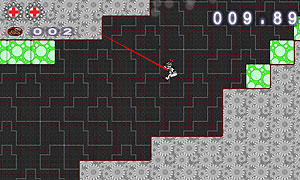 Mika Urtela and Hannu Pajula, graduates of the Department of Computer Science, are realising their piña colada-flavoured dreams in their game-producing company, Soul Aim Studios. This is the beginning of their story. The piña colada part of it has not come true yet, but they're working at it.
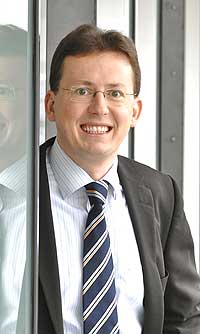 FiDiPro - the Finland Distinguished Professor Programme - enables distinguished international researchers to work and team up with the 'best of the best' in Finnish academic research. Financed by the Academy of Finland and Tekes, FiDiPro makes it possible to recruit highly merited scientists who are able to commit to long-term cooperation with a Finnish university or research institute.
 The Faculty of Science invited Linus Torvalds to be its honorary alumnus in Kumpula. During its alumni event, the faculty also named one of its lecture halls after Linus Torvalds. On the event held on Thursday 17 March, young researchers were the main speakers, and the 350 guests on the science campus gave them their full attention.